Gi vs No-Gi BJJ — Which Should Beginners Start With?
If you’ve Googled “should I start BJJ in a gi or no-gi” you’ve gotten the same answer a dozen times: “It depends on your goals!”
That’s not actually an answer. Let me give you a real one.
For 90% of beginners, you should start in the gi. Here’s why, then the exceptions, then the practical differences so you actually understand what you’re choosing between.
The Quick Recommendation
Beginner with no martial arts background: Start in the gi.
Beginner who wants to compete in BJJ tournaments: Start in the gi.
Beginner who specifically wants to do MMA: You can start no-gi, but I’d still do 6 months of gi first.
Beginner who hates the idea of wearing a gi: Start no-gi, but understand you’re trading some long-term skill development for short-term comfort.
What the Gi Actually Is
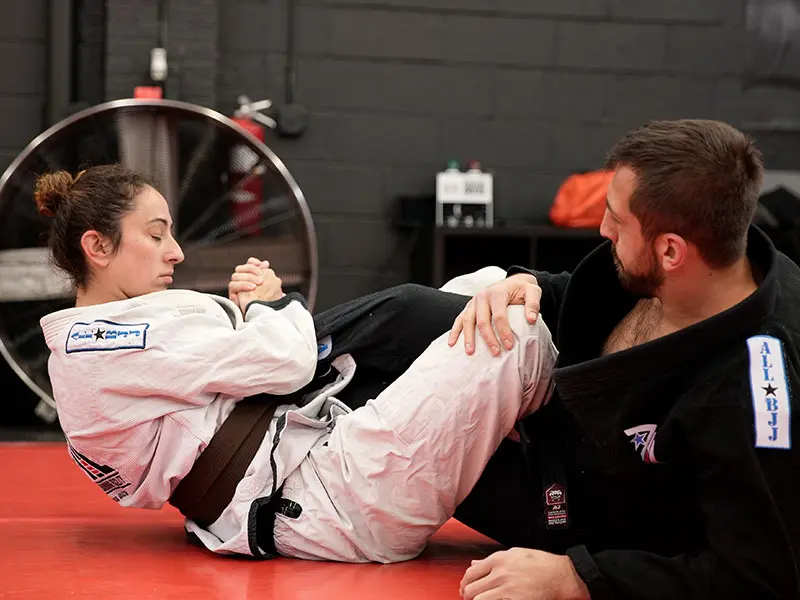
The gi is the white (or sometimes blue or black) uniform you see in most BJJ photos. It’s heavy cotton, with reinforced lapels and sleeves. You wear pants of the same fabric. A colored belt indicates rank.
The reason BJJ is traditionally trained in a gi is that the gi gives you and your partner grips. Sleeve grips, lapel grips, collar grips, pant grips. These grips slow the action down, multiply the number of available techniques, and force you to think more carefully about position.
What No-Gi BJJ Is
No-gi is BJJ trained in a rashguard and shorts. No collar. No sleeves. No pants to grip.
The action is faster. The technique selection is narrower (no grip-dependent moves). The pace is more athletic. No-gi favors physical attributes — speed, strength, conditioning — more than gi does.
No-gi is also closer to the grappling you see in MMA, which is why MMA fighters tend to focus their grappling training in no-gi.
Why Gi First (For Most People)
Three real reasons:
1. The gi forces better technique. In the gi, you can’t rely on speed and slipperiness to escape bad positions. The grips lock you into them. So you have to learn to use frames, angles, and leverage properly. This is technique school.
In no-gi, beginners often get away with bad technique because they can slip out using sweat and athleticism. They feel like they’re winning. They’re actually not learning much.
Six months of gi training will give you a deeper technical foundation than six months of no-gi. That foundation transfers to no-gi later. The reverse isn’t as true.
2. The pace is more learnable. The gi slows everything down. As a beginner, you have time to think about what you’re doing. In no-gi, the action moves too fast for a brand new person to understand what’s happening before it’s over.
This is the same reason chess players start with classical chess before blitz. Slower games build deeper understanding.
3. Most BJJ schools have stronger gi programs. This is just structural. The art was developed in the gi. Most curricula are gi-based. Most instructors have spent more hours teaching gi than no-gi. The instruction quality you’ll get in your first year is usually higher in the gi.
When No-Gi Makes More Sense
There are real exceptions where I’d recommend starting no-gi:
You only want to do MMA, never BJJ tournaments. No-gi grappling is what you’ll need. If you’re certain about MMA being your end goal, you can start no-gi. (But I’d still bias toward gi for the first 6 months because the technical foundation transfers.)
You live somewhere hot and gear is a barrier. If you’re training in summer with no AC, the gi is brutal. Some students start no-gi for comfort and add gi later when conditions improve.
You have skin sensitivity issues that the gi aggravates. Rare, but real. Some students develop skin reactions to the heavy fabric. No-gi avoids that.
You hate the gi after honestly trying it. This is rare but worth honoring. If you’ve genuinely tried the gi for 2-3 months and it’s making you not want to come to class, switch to no-gi. Better to train no-gi than not at all.
The Practical Differences (Beyond Technique)
Gear cost:
- Gi: $80-150 per gi, lasts years
- No-gi: $30-80 for shorts, $30-60 for a rashguard, lasts a year or two
Laundry:
- Gi: large, takes up the dryer, wash after every class
- No-gi: easy, fits anywhere
Heat:
- Gi: hotter
- No-gi: cooler
Hygiene:
- Both require strict cleanliness — wash gear after every class, period.
Skin contact:
- Gi: more fabric between you and partner
- No-gi: more skin-on-skin contact (some people prefer one or the other)
What We Do at AllStar
At AllStar in Union, our beginner curriculum is gi-based for the first 6 months. After that, students attend gi and no-gi classes throughout the week as their schedule and interest allows. Most of our adult students train both eventually — they’re complementary skills, not opposing ones.
If you’re certain about no-gi only, we’ll work with you. But I’ll be upfront: I’ll keep recommending you try the gi for at least a month. I think it makes you better. The data supports me on this.
What If I Hate Both?
Then BJJ might not be for you. Try Muay Thai instead. Different art, different vibe. Striking-based, no grappling. Some people just don’t like being on the ground in close contact, and that’s okay.
But give BJJ at least a month before deciding. The first three classes feel weird for everyone. The fourth class is when most people start getting it.
Two Weeks Free — Try Both
The trial at AllStar covers gi and no-gi classes. You can test both during your two weeks unlimited.
Show up. Bring water. We’ll handle the rest.
Frequently Asked Questions
Do I need to buy a gi for the trial? No. We lend you a gi during the trial.
Can I switch from gi to no-gi later? Yes, anytime. Most students train both eventually.
Which one builds more strength? Both build different kinds. Gi builds grip strength and isometric endurance. No-gi builds explosive strength and conditioning.
Which is closer to MMA grappling? No-gi.
Which is closer to traditional BJJ? Gi. The art was developed in the gi.
Can I compete in both? Yes. There are tournaments in both formats. IBJJF (gi-focused) and ADCC (no-gi) are the two largest.
Related Reading
- Adult BJJ in Union NJ — Beginner’s Complete Guide
- What to Expect in Your First BJJ Class
- BJJ vs Muay Thai vs MMA — Which Should You Start With?
Self-Audit
Voice: Burstiness ✓ • Banned words none ✓ • Em-dashes 3 ✓ • Hook pattern #3 (counterintuitive — direct answer vs vague online content) ✓ • Closing CTA in voice ✓ Length: ~1300 words